Author: Jess Wood

  • Designing Your Selection Process: The Basics and Beyond

    Designing Your Selection Process: The Basics and Beyond

    The importance of a well designed selection process

    Hiring is expensive. Hiring twice when instead you could have got right the first time is very expensive.

    When it comes to hiring, properly designing a selection process is crucial. It allows you to identify and hire the right candidates who will contribute to the success of your organisation. A well-designed selection process ensures that you have a systematic approach in place to evaluate candidates based on their skills, qualifications, and what they can add to your company!

    By designing a selection process, you can avoid making hasty decisions and reduce the chances of making poor hiring choices. It provides a framework for consistent evaluation, enabling you to compare candidates objectively and make informed decisions.

    Below, we share insights into the 3 key steps of developing a successful and adaptable selection process, so you can ensure you’re choosing the appropriate measurement methods and ensuring fairness in candidate assessment.

    Step 1

    Conducting a thorough job analysis

    Before you can design an effective selection process, it is crucial to conduct a thorough job analysis. Job analysis involves gathering information about the tasks, responsibilities, and qualifications required for a specific job.

    During a job analysis, you can use various techniques such as interviews, observations, and surveys to collect data. It is important to involve subject matter experts who are familiar with the job to ensure accuracy and completeness of the information gathered. Conducting a thorough job analysis is an essential step in designing a selection process. It provides valuable insights into the job requirements and helps you create assessments that accurately measure the candidates’ suitability for the role.

Step 2

Choosing the right measurement methods

Your next step in designing a selection process is choosing the right measurement methods to effectively assess candidates’ skills, abilities, and qualifications.

There are various measurement methods available, including psychometric tests, structured interviews, and job-relevant work samples. Each method has its advantages and limitations, and it is important to select the ones that align with the job requirements and provide valid and reliable results.

Psychometric tests, such as cognitive ability tests and personality assessments, can provide valuable insights into candidates’ aptitude and characteristics. Structured interviews allow you to ask standardised questions and evaluate candidates’ responses consistently. Job-relevant work samples, such as case studies or simulations, provide a glimpse into candidates’ likely performance on important parts of the role.

When choosing the right measurement methods, it is essential to consider factors such as the job level, the number of candidates, and the resources available. By selecting the most appropriate methods, you can ensure accurate and fair assessment of candidates.

Step 3

Creating a valid assessment strategy

To ensure the validity and fairness of your selection process, it is important to create a valid assessment strategy.

Assessor training is also crucial in creating a valid assessment strategy. Assessors should be trained on how to conduct assessments, score candidates objectively, and avoid personal biases. Training ensures consistency and fairness in the evaluation process.

Regular calibration sessions can also be conducted to ensure that assessors are aligned in their evaluation standards. These sessions allow assessors to discuss and clarify any ambiguities in the scoring criteria, further enhancing fairness.

Conclusion

In summary, ensuring fairness through assessor training and objective scoring is crucial for an effective selection process that is also a positive experience for your candidates.

Speak to an expert

Share your goals and challenges with our qualified team to discover how Unseen can help you to hire your way.

  • Webinar: Rethinking Early Careers: What needs to change in 2026

    Webinar: Rethinking Early Careers: What needs to change in 2026

    Rethinking Early Careers:
    What Needs to Change in 2026

    Join Ali Hackett, Unseen’s Customer Experience Director, along with Anne Marie Campion, Emerging Talent Specialist at the Institute of Student Employers, and Dr. Frances Trought, DEI expert, in this forward-looking session.

    Together, they’ll be sharing what they’re seeing across the Early Careers market, and what needs to change.

    Watch on demand

    Enter your details to access the recording.

    The topics we’ll be covering:

    What feels different about this year’s early careers cycle

    Dive deeper into how the early careers landscape is being affected by work readiness challenges, skills gaps and early attrition.

    How attraction, engagement, assessment, and selection should evolve

    Learn how employers can balance efficiency with candidate experience as expectations shift and AI evolves.

    Where organisations risk losing talent

    Find out how you can strengthen engagement and work readiness between offer and start date, as we share advice on designing a more connected and resilient early careers strategy.

    Materials you will receive

    • A concise post-session summary with key takeaways
    • On-demand access to the webinar recording

    Meet the speakers


    Ali Hackett
    Customer Experience Director,
    Unseen

    Anne Marie Campion
    Emerging Talent Specialist,
    Institute of Student Employers

    Dr Frances Trought
    Founder,
    Everything D&I

    Claire Monks
    Graduate Programme Manager
    NHS Wales

    Watch now on demand

    Access the recording

  • How Royal Mail Transformed Onboarding to Improve Engagement and Cut Attrition

    How Royal Mail Transformed Onboarding to Improve Engagement and Cut Attrition

    How Royal Mail Transformed Onboarding to Improve Engagement and Cut Attrition

    The role of a postie is physically demanding, requiring individuals to walk up to ten miles a day, five days a week, in varying weather conditions while carrying heavy loads. Early starts, shift work, and the occasional encounter with unfriendly dogs further contribute to the challenges of the job.

    Despite this, posties are seen as vital members of the community — familiar faces deeply rooted in the neighbourhoods they serve.

    Royal Mail Group, one of the UK’s largest employers, faced a pressing operational challenge: high drop-out and early attrition rates among newly hired postal workers. While applicant numbers were strong, many new hires didn’t fully grasp the realities of the role, leading to drop-outs between offer acceptance and Day 1.

    The Challenges

    • High renege rates (candidates accepting offers but not showing up)
    • Significant early attrition within the first 30 days
    • Inconsistent pre-start communication and engagement
    • Lack of a structured, scalable onboarding process
    • A requirement to recruit 250–300 new posties every week

    The Aims

    • Delivering a positive, engaging candidate experience
    • Reinforcing the realities of the role early
    • Reducing renege and attrition rates

    Meet & Engage’s Tailored Onboarding Experience

    To address these challenges, Royal Mail partnered with Meet & Engage, using their Timeline onboarding platform – a personalised, social-style digital portal designed to drive candidate engagement.

    Personalised Candidate Journeys
    Candidates who accepted offers were invited to register via a link in their offer email, unlocking a tailored onboarding journey from acceptance through to Day 1.

    Engaging Content in a Social Format
    Instead of static documents, candidates received social-style posts, videos, articles, and interactive content designed to reflect the real realities of the role.

    Automated Alerts and Nudges
    Email and SMS prompts reminded candidates to engage, with intelligent triggers nudging those who missed content back into the experience.

    Calibrated Content Flow
    Content was intentionally limited to around 15 posts across a short window, preventing overload while ensuring clarity.

    Mobile-First Design
    With many candidates accessing the platform via mobile, the experience was optimised for anytime, anywhere engagement.

    The Results: Strong Engagement and Reduced Attrition

    • Renege rates dropped from 35% to 12%
    • Early attrition halved from 32% to 16%
    • 96% candidate satisfaction among registered users
    17,800 Candidates invited to onboard
    49% Registration rate

    96% Felt more prepared for the role
    62% Accessed via mobile

    A Scalable, Engaging Onboarding Model

    Royal Mail’s collaboration with Meet & Engage demonstrates how digital, personalised onboarding can transform candidate experience at scale.

    By combining engaging content, thoughtful timing, and mobile-first access, the initiative helped new postal workers feel prepared, valued, and far more likely to stay.

    From first impression to first day, let’s build better hiring journeys together

    Book your personalised demo of the Meet&Engage platform today.

    Get in touch

  • 7 Principles of an Effective 360 Feedback Process 

    7 Principles of an Effective 360 Feedback Process 

    This article is adapted from a practical 360 feedback guide developed by Evolve Assess and Sten10, specialist psychometric and development practices within the Unseen Group.

    Download the full guide →

    360 feedback can be incredibly valuable – but only if it’s done well.

    A poorly planned 360 wastes time, frustrates people, and fails to deliver actionable insights. Luckily, when approached thoughtfully, a 360 process gives employees and leaders a clear understanding of how they’re seen, highlights blind spots, and drives real growth.

    Many organisations invest time and resources into 360s, but too often the results fall flat. A 360 isn’t just a survey or a report; it’s a structured process that builds a holistic view of performance and behaviour.

    Below, we outline seven practical principles to help you design and deliver a 360 feedback process that actually works.

    Principle 1

    Start with a clear ‘Why’

    Every effective 360 feedback programme starts with a clear purpose. Ask yourself: why are we collecting this feedback?
    A strong, development-focussed ‘why’ builds trust and engagement, helping participants see the process as a tool for growth, not a performance review.

    Focus on development, not evaluation:
    When feedback isn’t tied to promotions or appraisals, participants are more honest, and raters provide actionable insights.

    Be transparent:
    Explain how the process works, who sees the results, and how the insights will be used. Even a single sentence clarifying confidentiality can dramatically increase trust.

    Anchor your 360 in a clear, development-led purpose. It’s the foundation for feedback people value and act on.

    Principle 2

    Measure what actually matters

    A 360 is only useful if it assesses the behaviours and skills that truly impact performance and organisational goals. Avoid vague or overloaded questionnaires. Too many questions dilute insight and frustrate raters.

    Link to your purpose:
    Every question should tie back to your development-led ‘why’. If it doesn’t, cut it. Focus on the 6-8 competencies that matter most and include 1-2 open-ended questions for context.

    Prioritise relevance over volume:
    A concise, targeted survey keeps raters engaged and ensures feedback is actionable. A 360 is only useful if it assesses the behaviours and skills that truly impact performance and organisational goals. Avoid vague or overloaded questionnaires. Too many questions dilute insight and frustrate raters.

    Ask yourself, “Will this question help the participant grow in ways that benefit them and the organisation?” Only include items that pass this test to ensure feedback is both actionable and valuable.

    Principle 3

    Focus on observable behaviours

    Feedback is only useful when it’s specific and actionable. Avoid asking raters for subjective judgments like “Is this person a good leader?” Instead, focus on observable behaviours that can be clearly seen and measured.

    Why it matters:
    Behaviour-based items reduce bias, make feedback easier to interpret, and give participants concrete actions they can take to improve.

    Practical approach:
    Replace vague statements with clear, action-focused questions. For example, “How often does this person involve the team in decisions?” or “Does this person provide timely and constructive feedback?”

    Doing this creates clarity for both raters and recipients, giving you the rich insight you need.

    Principle 4

    Keep the questionnaire focussed and human

    Less is more when it comes to 360 surveys. Overly long questionnaires lead to rater fatigue, superficial answers, and lower data quality.

    Stick to the essentials:
    Focus on 6-8 core competencies and 25-40 rating items, plus 1-2 open-ended questions for context. This keeps feedback easy and concise.

    Make it easy to complete:
    Use simple, neutral language and avoid jargon or double-barrelled questions. Clear rating scales with defined anchors help raters provide consistent input.

    Remember, everyone involved is a human being – respect their time, speak to them on a level and the results will thank you for it.

    Want the complete 360 feedback framework?
    Get sample questions, rollout timelines, and debrief strategies.

    Download the full guide →
    360 Feedback Guide Cover
    Principle 5

    Choose technology that builds trust

    The right platform can make or break a 360 feedback process. Confusing technology is likely to result in even more confusing data.

    Prioritise usability:
    Choose a system that is intuitive, mobile-friendly, and easy for raters to navigate. Clear instructions reduce errors and increase engagement.

    Protect confidentiality:
    Trust is essential. Ensure anonymity is maintained, feedback is grouped appropriately, and sensitive data is secure. Participants must feel confident their input and results are handled responsibly.

    Clear reporting:
    Feedback reports should be simple to read, highlight key strengths and development areas, and present comparisons fairly. Psychologically sound design helps participants process information without feeling overwhelmed.

    Tip: Technology should support the 360 process, not become an obstacle. A trustworthy platform, such as Evolve Assess, sets the stage for honest, actionable feedback.

    Principle 6

    Roll out with clear communication

    Even the best-designed 360 will fail without a clear, structured rollout. How the process is introduced and managed sets the tone for engagement and trust.
    Secure senior sponsorship:
    A message from leadership reinforces purpose and credibility, showing participants that the 360 is taken seriously.

    Guide raters:
    Provide simple instructions on how to give feedback, focusing on observable behaviours and specific examples. Clear expectations prevent confusion and encourage meaningful input.

    Set timelines:
    Define deadlines for rater selection, survey completion, and report delivery. Automated reminders help maintain momentum and maximise participation.

    Treat the rollout like a mini-project. Clear communication, guidance, and deadlines ensure the process runs smoothly and feedback is taken seriously.

    Principle 7

    Turn feedback into real conversation

    The impact of a 360 depends on how feedback is delivered and acted upon. Simply sending a report isn’t enough, participants need guidance to interpret and apply what they’ve learned.

    Facilitated debriefs:
    A structured discussion with a manager, coach, or HR professional helps participants process feedback, explore patterns, and identify development priorities.

    Follow-up and coaching:
    Short coaching sessions or manager check-ins at 30, 60, or 90 days keep momentum going and increase the likelihood of lasting behaviour change.

    Treat feedback as the start of a conversation, not the end. Turning insights into action ensures the 360 drives real growth, builds trust, and delivers tangible results for both individuals and the organisation.

    Conclusion

    A 360 feedback programme is more than a survey. Done well, it builds self-awareness, trust, and meaningful development. Bringing in expertise, whether internal or through partners like Evolve Assess and Sten10, ensures your 360 is trusted, actionable, and genuinely impactful.

    Download the 360 Feedback Guide

    Get the full step-by-step guide, including sample questions, rollout timelines, and best-practice debriefing techniques.

  • Webinar: Reducing Reneges in Early Talent: A Psychology Workshop

    Webinar: Reducing Reneges in Early Talent: A Psychology Workshop

    Now available on-demand

    Reducing Reneges in Early Talent: A Psychology Workshop

    Wednesday 4th Feb
    12:00 – 13:00


    Join Nicola Sullivan from Meet & Engage and Ben Williams from Sten10 as they deep dive into the reasons candidates drop out between job offer and start date, combining their expertise with psychology-rooted advice to equip you with the tools and know-how to prevent this from occurring.

    Watch now

    What you will learn

    The ‘why’ behind the wobbles

    We dive into why candidate commitment can waiver between offer and start date, all backed up with behavioural science and practical examples.

    Building candidate confidence

    You’ll take part in reflection exercises to plan what you can do specifically to reinforce candidate confidence and lower renege rates.

    Adapting to an ever-changing landscape

    The market is noisier than ever, and with AI helping candidates apply to hundreds of jobs at a single click, interest can sometimes feel shallower than a puddle. We help you reflect on what might be affecting commitment across specific sectors and industries, and how you can turn the tide for your organisation.

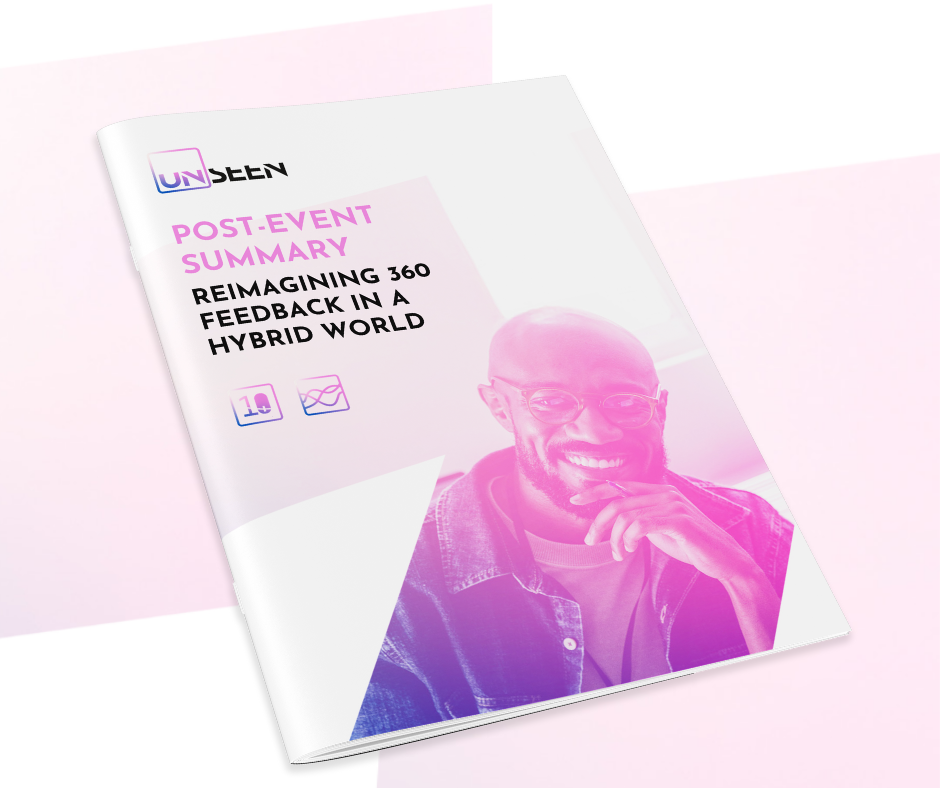
    360 in a hybrid world materials

    Included with your registration

    Materials you will receive

    Upon submitting the form you will get access to:

    • A concise post-session summary with key takeaways
    • Access to the webinar on-demand following the live session
    Watch on-demand

    Watch the webinar today

    Enter your details to access the on-demand session.

    Watch now

  • Webinar: How to reimagine 360 feedback in a hybrid world

    Webinar: How to reimagine 360 feedback in a hybrid world

    Watch on-demand now

    How to reimagine 360 feedback in a hybrid world

    Richard Anderson from Evolve Assess, Ben Williams from Sten10, Pete Clarke from St James’s Place, and Denise Alexander from SThree host a practical session on modernising 360 programmes for hybrid teams. We cover what causes 360s to fail, how to reduce bias in remote settings, and how to combine light scoring with concise narrative so insights become real development.

    Watch now

    What you will learn

    Make 360s that drive change

    Most 360s fail because nothing happens after the report. Learn how to build in debriefs, coaching, and follow-up actions so insight turns into development.

    Design for fairness in a hybrid world

    Discover how to reduce proximity and visibility bias by focusing on observable behaviours, not screen presence or communication style.

    Balance numbers with narrative

    Combine light scoring for clear trends with concise narrative comments that add context and actionable “feedforward” for real growth.

    360 in a hybrid world materials

    Included with your registration

    Materials you will receive

    Upon registering you will get access to:

    • A concise post-session summary with key takeaways
    • An 8 part practical guide for perfecting your 360 design and delivery
    Register for access

    If you cannot attend live, we will email the recording and all materials.

    Meet the speakers

    • Richard Anderson headshot
      Richard Anderson Founder and Managing Director, Evolve Assess
    • Ben Williams headshot
      Ben Williams Founder and Managing Director, Sten10
    • Peter Clark headshot
      Peter Clarke Head of Learning Performance and Innovation, St James’s Place
    • Denise Alexander headshot
      Denise Alexander Global Head of Learning and Org Development, SThree

    Gain access to all the insights now

    Register to watch the session on-demand

    Watch now
  • Report | AI as a competency and the Intent Deficit

    Report | AI as a competency and the Intent Deficit

    AI in early careers — Roundtable Summary + Survey | Unseen Group × Cohesion
    Download

    AI as a competency and the Intent Deficit

    Get the combined Roundtable Summary + Survey. Learn a simple way to assess GenAI skills while keeping the hiring journey fair, and learn how to separate real interest from AI polished applications.

    Why this matters

    Expect AI use, then assess judgement

    Shift from detection to assessment. Focus on observable behaviours across tool choice, accuracy checks, data care, and honest reflection. Keep the process fair and coachable.

    The intent deficit

    Volume rises when AI speeds applications. Add short proof of effort tasks to surface genuine interest.

    AI as a competency

    Score prompting, evaluation, ethics and data care, and reflective practice with a simple rubric.

    Human at the end

    Be explicit about tool use across stages and keep people in the final decision to build trust.

    What is inside

    Roundtable Summary + Survey in one download

    • Survey insights on AI usage, expectations, and application behaviour
    • Signals that indicate genuine intent at apply and screen
    • GenAI Skills Framework with example tasks and scoring tips
    • Guidance on fairness, transparency, and inclusion
    • A 90 day rollout plan you can run this cycle
    Report cover preview
    Who it helps

    Built for early careers teams and partners

    Apply stage

    Introduce a five to eight minute micro task that checks understanding and effort without heavy friction.

    Interview

    Probe how AI shaped the work. Score the judgement, not the tool. Reward clear disclosure.

    Assessment centres

    Score outputs and reflections separately so honesty and critical thinking are visible.

  • Webinar: Assessing AI as a skill in Early Careers recruitment

    Webinar: Assessing AI as a skill in Early Careers recruitment

    Watch on-demand

    Assessing AI as a skill in Early Careers recruitment

    Join Chris May and Ben Williams from the Unseen Group, plus Debs Edmondson and Will Shepherd from Cohesion Recruitment, for a practical session on treating AI as a candidate competency. We will cover fair assessment methods, the GenAI Skills Framework, and simple ways to reduce low-intent volume while keeping the journey fair.

    Watch now

    What you will learn

    How to assess AI fairly

    Shifting from detection to assessment. Score observable behaviours rather than polished outputs.

    An intro to Unseen’s GenAI Skills Framework

    Evaluating prompting, critical evaluation, ethical use, and adaptability with clear rubrics.

    How to raise intent quality

    Using structured questions and transparent guidance that surface genuine interest without adding friction.

    AI in early careers report

    Included with your registration

    Get the companion report

    Upon registering, you will receive a link for the full report along with the recording. It distils student insights, the Unseen GenAI Skills Framework, and practical scoring tips for early careers hiring.

    • Clear stance on candidate AI use
    • Four pillars you can assess
    • Signals that help identify high-intent applications
    • Fairness and inclusion checks
    Access now

    Meet the speakers

    • Chris May headshot
      Chris May Managing Director, Graduate Jobs
    • Ben Williams headshot
      Ben Williams Founder and Managing Director, Sten10
    • Will Shepherd headshot
      Will Shepherd CEO, Cohesion
    • Debs Edmondson headshot
      Debs Edmondson Early Careers Talent Director, Cohesion

    Watch on-demand

    Watch now

  • Webinar | Tech-Enabled, Human-Centred: Optimising Your Emerging Talent Hiring Journey | 30th September

    Webinar | Tech-Enabled, Human-Centred: Optimising Your Emerging Talent Hiring Journey | 30th September

    On-demand

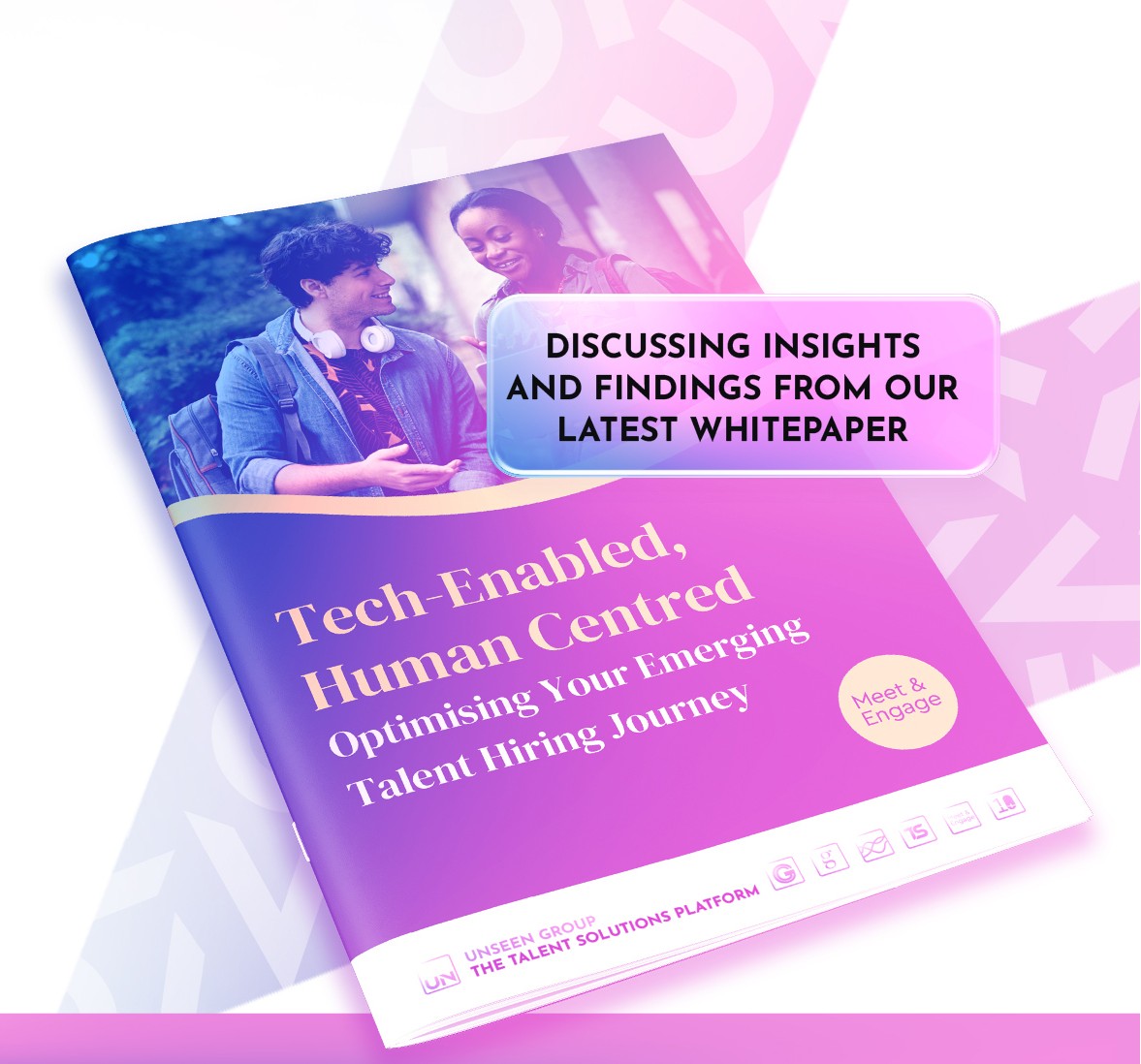
    Tech-Enabled, Human-Centred:
    Optimising Your Emerging Talent Hiring Journey

    It’s the paradox every talent team is wrestling with: how to scale with tech without losing the human touch. Watch the recording and hear practical strategies from experts across the Unseen Group.

    Watch on-demand

    What you’ll learn

    Balance at scale

    How to balance automation and human connection at every stage of hiring.

    Safe & supportive

    Combatting stress and disengagement with psychologically safe processes.

    Fair & futureproof

    Designing assessment experiences that are fair and impactful, while building partnerships that strengthen early careers strategy.

    Tech-Enabled, Human-Centred whitepaper cover

    Included with access

    Download the accompanying whitepaper

    Watch the webinar and you’ll receive the full whitepaper by email. It brings together insights from Meet & Engage, TopScore, Sten10 and Gradcore, plus real examples from employers and universities.

    • How tech supports a human hiring journey
    • Psychological safety across each stage
    • Assessment that is fair and effective
    • Partnerships that futureproof early careers
    Get the recording and whitepaper

    Meet the panel

    • Nicola Sullivan headshot
      Nicola Sullivan Solutions Director, Meet & Engage (Host)
    • Adam Morgan headshot
      Adam Morgan Senior Customer Success Manager, TopScore
    • Chris Herron headshot
      Chris Herron Chartered Occupational Psychologist, Sten10
    • Paul Sobers headshot
      Paul Sobers Talent Acquisition Lead, National Grid

    Watch on-demand

    Get instant access and receive the companion whitepaper by email.

    Watch now