Tag: hero

  • Blog post: Inside the candidate mind

    Blog post: Inside the candidate mind

    Science

    Inside the candidate mind

    The psychology of the candidate journey

    Ben Williams

    Ben Williams

    Chief Scientist, Unseen Group

    It’s always been the way that hiring teams have separated recruitment into different stages, systems and workstreams, but candidates navigate and experience processes in a much more continuous, even linear, way.

    While you’re busy deciding if the candidate is the right fit for your organisation, they’re deciding whether your organisation is the right fit for them. Psychologically, people make inferences about what it will be like to work somewhere based on their experiences during recruitment. This means that every stage of your journey can either strengthen or weaken the story you are trying to tell about your organisation – and while each team across your stages could be doing a brilliant job, the overall candidate experience can still feel fragmented or inconsistent.

    By looking into the psychology of the candidate as they move through the journey, we can better understand them and find practical ways to make things feel joined up, even when different technologies, teams and suppliers sit behind different stages.

    Stage 1

    Attraction

    What the candidate is thinking: Can I see myself there?

    When candidates look at the people already working in an organisation, they are imagining a future version of themselves.

    The Recruiter Problem

    The right people don’t apply, or candidates apply with the wrong expectations.

    You will already be aware of the importance of representation in your marketing and attraction, but can your candidates genuinely identify with the people and stories they’re seeing?

    Candidates are savvy enough to know that employer brand content is designed to persuade them. So if every employee uses the same, scripted language, it can be difficult to hear the person behind the message which can impact authenticity.

    Our upcoming report, The Science of Employee Generated Content, dives into the power behind this and the credibility that individuality brings to your employer brand during the attraction stage.

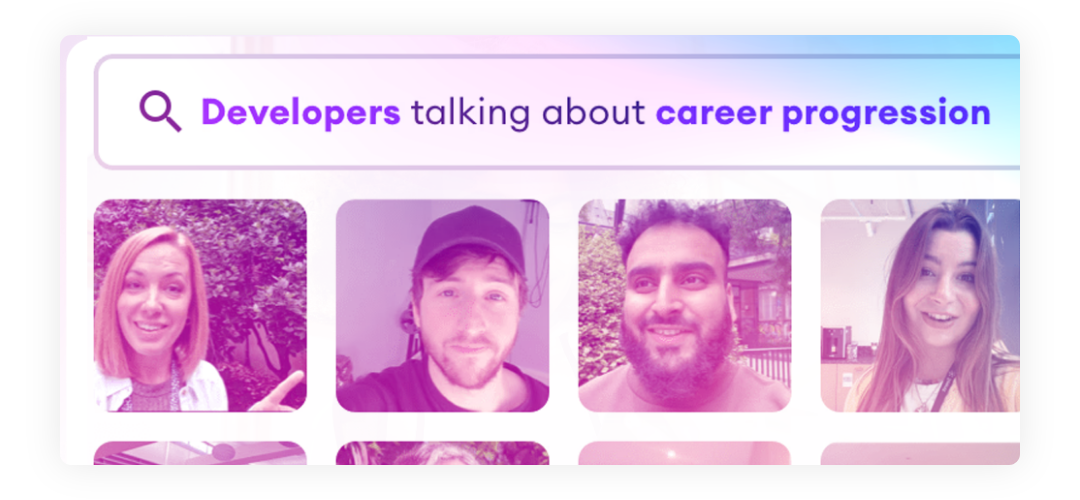
    Look for ways to give employees the freedom and confidence to tell their own stories, like through user generated content that they take the lead on. This could take the form of videos or posts shared on social, blog posts, thought pieces, or articles for the company website, or sharing professional milestones on LinkedIn. It can also be worth looking into different platforms that can help the team to create, for example Seenit guides and supports employees from start to finish in creating authentic testimonials in their own voices, even if being on camera isn’t something they’re used to.

    Stage 2

    Keep warm communications

    What the candidate is thinking: Is this worth continuing?

    Now they’re in the process, candidates are deciding whether to keep investing their time and attention.

    The Recruiter Problem

    Good candidates lose interest, disengage or drop out.

    Several things can raise red flags for candidates, with silence being the first. If there are delays or gaps in communication, without any context given, candidates will worry and fill those silences with their own stories, wondering whether they have failed or been forgotten.

    Ensure you’re giving candidates clear communication deliberately at the moments where uncertainty is most likely to grow, rather than just increasing your volume of communications overall.

    CIPD and Omni RMS reported in 2024 that 27% of UK employers recruiting in the previous year had experienced a new starter simply failing to turn up on Day One.

    We recently outlined four key principles exploring science-backed approaches to this stage in the recruitment process, backed up by real examples of how to apply them shared by Holly Pearce, Grant Thornton’s Talent and Recruitment Experience Manager, in our blog. For practical strategies to reduce reneges and make sure your candidates are ready to join your team, read the full article here.

    Keep warm comms
    Stage 3

    Assessment

    What the candidate is thinking: Can I show you what I can do?

    Candidates naturally form judgements about whether an assessment seems connected to the job and whether it feels like a reasonable way of making a decision about them.

    The Recruiter Problem

    Poorly designed or inconsistently delivered assessment can drive drop-out, distort performance and lead to poorer hiring decisions.

    Ensure you explain what you are assessing and why it matters to the role.

    Difficulty should also be purposeful. An assessment should be challenging because the capability being assessed is challenging, not because the instructions are unclear, the interface is awkward or the time limit has not been properly tested.

    It’s also important to think about the team delivering the assessment and how their behaviour can affect fairness and consistency, as this can impact how attractive the company feels at this stage in the journey.

    Assessment
    Stage 4

    Preboarding and Onboarding

    What the candidate is thinking: Have I made the right choice?

    Once a candidate receives and accepts an offer, the judgements and decision-making don’t stop there. Candidates may still be comparing opportunities, responding to a counteroffer or looking for reassurance that they have made the right choice.

    The Recruiter Problem

    Candidates accept offers, then renege, fail to show or disengage early.

    Ensure your preboarding creates reassurance, connection and preparedness. Ahead of day one, share useful information and create opportunities to build connections (either in-person or virtually) to help candidates feel more engaged and prepared.

    On day one, it’s important that the experience matches what you promised the candidate during attraction and recruitment.

    If candidates were told they would have a voice, give them opportunities to contribute. If they were shown a close-knit team, introduce them to that team as soon as possible. If development was part of the recruitment story, show them how learning is supported. It may seem obvious, but ensuring these things are joined up can have a really positive impact post-offer.
    Onboarding content

    Four psychological judgements, one relationship

    Every stage of your journey has the potential to change what a candidate thinks of your organisation. The challenge isn’t simply to optimise attraction, communications, assessment and onboarding independently. It’s to make sure they tell a consistent story.

    What story does your candidate journey tell?

    If you’re reviewing how your organisation attracts, assesses, hires and onboards talent, make sure to download your free copy of The Science of the Candidate Experience; to learn how to deliver better preboarding and onboarding through technology and behavioural science.

    Want to learn more about Unseen? Get in touch with us today.
  • Blog Post: The ROI Articulation Gap

    Blog Post: The ROI Articulation Gap

    Talent Strategy

    The ROI Articulation Gap

    How robust data, joined-up evidence and clear storytelling can support stronger investment decisions for hiring teams.

    Ali Hackett

    Ali Hackett

    Customer Experience Director, Unseen Group

    Seeing the value of your hiring approaches is one thing, articulating it to finance teams and senior leaders is another.

    As budgets face greater scrutiny, we’re regularly hearing from our customers about the increasing pressure they’re under to demonstrate return on investment. They’re noticing improvements in candidate experience, efficiency and quality of hire off the back of new approaches, but connecting those improvements to wider business priorities in clear measurable terms is more challenging.

    This is why we support customers with a joined-up approach to ROI. By bringing together financial, operational and candidate data, employers can build a fuller picture of the value created.

    For example, Meet&Engage – Unseen’s candidate experience and onboarding tool – helped the Ministry of Justice save an estimated 234 days of human work time through chatbot support, while maintaining a 94% candidate satisfaction rating.

    Our mission this year has not only been to provide our customers with strong ROI, but to help them prove it internally too.

    For EDF Energy, the clearest value measure was financial, with an estimated 80% reduction in assessment centre costs following the introduction of our digital assessment centre platform, TopScore. However, the efficiencies of this approach also saved candidates around five hours of travel time per assessment centre. By bringing in this additional value measure, the EDF hiring team can paint a fuller picture of the value their strategy has driven.

    A common mistake is stopping ROI conversations at cost. These examples show how the strongest cases also account for what changed operationally, what the data shows, and what the experience meant for candidates going through the process.

    At Unseen, we’re sharing how robust data, joined-up evidence and clear storytelling can support stronger investment decisions for hiring teams.

    Building a picture of ROI

    Unfortunately, there’s no single measure that captures ROI, and success will look different from one organisation to another. To start building the picture, sit down with your team and work through the following:

    Starting point: what problem existed and what was the baseline?
    Intervention: what changed and why?
    Evidence: what improved, how do we know and what did it cost?
    Wider value: what did it mean for candidates, teams, fairness, risk and future decisions?

    What this looks like in practice

    Hiring faster at scale

    Yodel

    Starting point: high-volume recruitment, the need to guide candidates towards relevant roles and support them outside normal recruiter hours.

    Intervention: Unseen’s Meet&Engage platform introduced automated screening, a match-me solution, and evening/weekend support, integrated with Yodel’s ATS and careers site.

    Evidence: average time to hire reduced by 38%. Across the first two years, the screening bot assessed 68,983 candidates and the chatbots handled 197,700 conversations, with 97% of candidates rating the overall experience positively.

    Wider value: hiring speed and scale, sustained alongside candidate experience, giving a broader view of value than time to hire alone can provide.

    Build your own internal case

    If you’re finding it difficult to explain the value of your hiring work internally, these examples offer a practical starting point. Choose one live challenge in your own hiring process and use the four questions above to turn it into a clear internal case.

    Start by agreeing what success looks like and capturing a baseline. Then bring together the measures that matter, from cost and team capacity to candidate experience, fairness and speed. Present the evidence in terms that finance, HR and senior leaders can use, while being clear about what the data can and cannot prove.

    You don’t need to reduce a complex talent process to a single number. You need a clear, honest account of what changed, what the data shows and why it matters to help others understand the value your team is creating and build support for future investment.

    Your checklist for measuring and articulating ROI

    #1

    Agree what success looks like before launching a programme.

    #2

    Capture baseline measures so change can be assessed.

    #3

    Combine operational, candidate and business measures.

    #4

    Track outcomes across the journey, rather than at one isolated stage.

    #5

    Present findings in language that finance, HR and senior leaders can use.

    #6

    Be clear about what the data can and cannot prove.

    Access free resources to help you build better ROI cases

    We know the challenge of showcasing ROI effectively is a live one for hiring teams. As campaigns kick off for the season, now is the time to start laying the groundwork for the conversations you’ll need to have later on.

    Follow the Unseen LinkedIn page to keep up to date with free resources we’ll be releasing, including:

    ● Client evidence and practical examples.
    ● The measures that help employers understand value.
    ● Guidance on connecting talent activity to internal business priorities.
    ● Perspectives on using data without losing sight of people and candidate experience.

    Talk to us about proving ROI

    We can help you identify the measures that matter, connect them to business priorities and build a clearer internal case.

  • Webinar: On Their Wavelength: Insights from research and real candidate journeys

    Webinar: On Their Wavelength: Insights from research and real candidate journeys

    On Their Wavelength

    Insights from research and real candidate journeys

    Available on demand

    Our experts reveal where candidate expectations and reality aren’t quite aligning, and where employers can have the greatest impact

    Watch now on demand

    Throughout Spring 2026 we surveyed 818 students, graduates and apprentices across the UK to understand how they experience the early careers market, the barriers they face, and how ready they feel for work.

    In our latest webinar, we discussed what employers need to do to ensure that they’re driving engagement with content that really works.

    Access the recording on demand

    What we’ll explore

    01

    How candidates navigate today’s market

    Discover how students, graduates and apprentices move through the early careers journey — from application to offer — and the challenges they’re encountering.

    02

    The confidence gap

    Understand the barriers candidates face, where confidence drops, and what “work readiness” actually means from their perspective.

    03

    What employers can do next

    Learn practical actions organisations can take to help candidates feel prepared, confident and ready to contribute from day one.

    Go beyond the statistics

    This session shares the real, lived experiences behind the data. We explore what today’s candidates are telling us, where employers can make meaningful improvements, and how organisations can create recruitment experiences that build confidence, reduce barriers and improve early careers outcomes.

    Meet your hosts

    Hear directly from the team behind the research as they unpack the findings, share real candidate stories and discuss what employers can do next.

    Ben Williams
    Chief Scientist
    Unseen
    Connect on LinkedIn
    Sarah Brown
    Onboarding & Implementation Director
    Unseen
    Connect on LinkedIn

    Watch now on demand

    Fill in your details to access the recording.

    Watch now
  • Your voice: Hearing from our customer community

    Your voice: Hearing from our customer community

    At the heart of everything we do is our community.

    The people and organisations who trust our tools every day to deliver meaningful, impactful talent experiences. That’s why we recently ran our first customer happiness survey as Unseen group across our technology platforms – and we couldn’t be more grateful to everyone who took the time to share their thoughts. The results are already helping us to develop our digital assessment centres, assessment design, psychometric testing and candidate experience tools.

    For us, feedback isn’t just a box to tick. It’s how we grow. It’s how we stay honest with ourselves, sharpen our focus, and make sure we’re genuinely meeting the needs of the people we serve. This survey was a big step in formalising that commitment, and the insights we’ve gathered will shape how we work – starting right now.

    Firstly, a huge thank you to our team!

    Our team received outstanding recognition from customers, who described them as responsive, knowledgeable, and genuinely supportive. That kind of feedback doesn’t happen by accident, it’s the result of people who care deeply about the work they do and the customers they support every day.

    Beyond the science and technology that underpins our tools, our Customer Experience team exists to deliver talent experiences that are scalable, fair and human using their technical knowledge and recruitment expertise. They provide a direct line for development and support, so we’re delighted to hear this reflected in our customers’ real experience.

    We’re so pleased to hear from our customer community that they feel supported by our collaborative team. Here’s some of what they had to say:

    Client Feedback
    “Impeccable support from the team.”
    Client Feedback
    “Charlotte is incredibly helpful and very responsive!”
    Client Feedback
    “Help & Assistance when required is first class and on point, thank you.”
    Client Feedback
    “Amazing customer support team and always on hand if we have any issues.”
    Client Feedback
    “Adam and the team are fantastic and so quick at coming back to us, nothing is ever too much trouble and our issues always get sorted.”

    And the numbers back it up.

    Our overall Net Promoter Score landed in the ‘Excellent’ category.

    A benchmark that reflects just how strongly our customers feel about recommending us to others. Our platforms were described as effective, practical, and well supported, which is a real testament to the dedication across every part of the business.

    Looking ahead: Continuous development driven by science and storytelling

    While we’re pleased with this feedback and great score, what excites us most is what comes next.

    We’re taking the feedback from this survey and building it directly into how we work, both immediately and in the longer term. At Unseen, we bring together technology, psychology and human storytelling across all stages of the talent journey, so continually evolving our software and support is critical to serving our customers.

    That work is already well underway, and we can’t wait to share more as it develops.

    We’re also doubling down on telling the story of our brilliant team, because the people behind the technology are just as important as the technology itself. And we’ll be working hard to ensure every customer, whether new or long-standing, feels the full value of what we deliver together.

    This feedback is being used to influence our roadmap and future product developments, so we can continue to provide our clients with the excellent service they’re used to. We’ll be surveying again, tracking our progress, and holding ourselves accountable to continuous improvement.

    The momentum is real, the team is fired up, and the best is very much still to come. Thank you for being part of this journey with us.

  • Webinar: GenAI meets GenZ – What it means for Early Careers hiring

    Webinar: GenAI meets GenZ – What it means for Early Careers hiring

    GenAI meets Gen Z:
    What it means for Early Careers hiring


    Now available on demand

    Join Unseen and PeopleScout for a session exploring how generative AI is reshaping early careers hiring and what employers should do about it.

    GenAI isn’t just changing how candidates apply. It’s changing how they prepare, how they present themselves, and how they engage with the hiring process. And importantly, most candidates are trying to use AI ethically to put their best foot forward.

    Built around insights from PeopleScout’s latest report, GenAI meets Gen Z, this session will unpack what these shifts mean in practice and how employers can build a clear, thoughtful strategy in response.

    From application through to assessment and onboarding, we’ll explore how hiring approaches need to evolve to stay fair, credible, and effective in an AI-enabled world.

    Watch on demand now

    What we cover

    How GenAI is shaping candidate behaviour

    Understand how students and graduates are using AI across applications, assessments, and preparation and why this is less about misuse, and more about evolving expectations.

    Rethinking assessment in an AI-enabled world

    If AI is here to stay, how do you design processes that remain fair and credible? We’ll explore how to assess not just outputs, but how candidates use AI judgment, transparency, and decision-making.

    Building an AI-aware early careers strategy

    Learn how to adapt your attraction, assessment, and selection approach setting clear expectations, encouraging ethical AI use, and improving confidence in hiring decisions.

    What you take away

    • Key insights from the GenAI meets Gen Z report
    • Practical ways to respond to AI in your hiring process
    • A clearer strategy for assessing talent in an AI-enabled world
    • A recording of the session to revisit and share

    Speakers


    Nicola Sullivan
    Partnership Solutions Director
    Unseen

    James Chorley
    Talent Solutions Director
    PeopleScout

    Pip Wright
    Talent Systems Technologist
    Unseen

    Amanda Callen CPsychol AFBPsS FRSA
    Head of Assessment Design
    PeopleScout

    Watch on demand

    Access the recording now

  • How to develop a Company Culture before hiring for it

    How to develop a Company Culture before hiring for it

    What is Company Culture?

    Company culture is a bit of an abstract concept; many think they understand it, but few can define it or explain how their culture was developed and maintained.

    What is company culture and how important is it to get right?

    Let’s start with a definition of company culture. The Cambridge Dictionary defines corporate culture as: ‘The beliefs and ideas that a company has and the way in which they affect how it does business and how its employees behave.’

    It’s a good definition; it seems logical, straightforward, and concise. The problem is, it all too often seems that not many companies define their culture this way. Moreover, don’t all companies (especially when you ask their leaders) purport to have a ‘good corporate culture’?

    The problem with misunderstanding your culture

    It seems logical that business founders will be responsible for establishing a company culture and defining what that culture should be.

    This culture is typically based on the company founders’ own personal values, vision, and their preferred working environment – and that culture will be imparted to the next member of staff, then the next, then the next… this seems like a logical strategy – but this is where many businesses start to struggle.

    When a company culture is defined this way, the first few members of staff all end up being just like the company founder(s), meaning they may all share the same personal values, vision and work environment preferences. This all sounds great, and the recipe for a productive work environment, but when you start to dig a little deeper, is the best recruitment policy to employ ‘people that the founders would enjoy having a beer with’?

    It’s a fairly common example: ‘we have a great company culture… we all go out for a beer after work on a Friday!’
    But does this really mean the company has a great culture? Who says? Does it also mean that those people who can’t/don’t want to join the Friday beer club, won’t be model employees, who fully buy in to the business’ values and goals?

    Although the beer example might be quite extreme, the point is that the ‘pint after work’ definition of good company culture does nothing for the long-term success of the business.

    As a business increases its revenue, inevitably, more staff are required to meet demands; new staff with new skill sets to be brought in and new processes are to be implemented to streamline operations. This requires recruiting a very different set of individuals, with different personalities and unique personal aspirations.

    Culture and hiring

    The effect of a badly-defined company culture

    A badly-defined company culture leaves the hiring manager asking all the wrong questions in interviews: is this person going to get on well with the rest of the team? Do I have anything in common with them? Are they like me? Will they be a good cultural fit (will they fancy a beer on Friday after work)?

    Now this is where mistakes are made by some:

    It’s not so much unconscious bias on the part of the hiring manager, as it is them genuinely believing this person doesn’t represent a cultural fit with the company. The issue is, the very cultural fit against which the candidate is being measured, has been defined in the wrong way!

    This means that the hiring manager, all through wanting to perpetuate a poorly- defined company culture, is potentially missing out on the best person/people for the vacancies.

‘If we mention all of these great things we do, will this candidate work 10-hour days and weekends when we need them to?’

The ‘Friday beer’ example was only provided to illustrate a point; there are so many other examples of badly defined company culture that are far more common, and often detrimental. And it’s not always driven by the founders’ own personal values, vision and preferred work environment – it’s often erroneously defined by other ways.

For example, wanting to present a culture that the company thinks that staff and prospective hires will want… but the reality is far different from the concept.

Having break-out areas, cool, edgy office furniture, and free snacks – the whole ‘work hard/play hard culture’, often translating to staff having to work 60 hours a week to be rewarded with a free Dominos at the end of the month, doesn’t feel like a great culture.

Of course, we’re not suggesting that every company that has these policies and perceived benefits in place are disingenuous – far from it! But it does happen far too often that staff are misinformed about the role, and that many hiring managers are assessing cultural fit by asking internal questions such as ‘if we mention all of these great things we do, will this candidate work 10-hour days and weekends when we need them to?’

Many growing businesses are struggling to effectively define their culture, but this is a key step that needs to be completed before you can start to hire for cultural fit – so, how can this be done?

Step 1

Establish an organisational values framework

Nowadays, it’s becoming more and more important to develop an organisational values model. Company values are the core set of beliefs that a company has and gives all staff the opportunity to get behind the same goals.

Some examples of company values could include:

    Openness, transparency, accountability and creativity

When developing company values, take plenty of time to get it right; it’s pivotal and will underpin everything from hiring to strategy, process to profits. Brainstorm with your team, involve as many stakeholders as possible. Include staff, shareholder, customers, and suppliers – what are the traits we have as a business that we want to keep, what do we want to eliminate and what do we want to do that we don’t currently? Having a core set of company values sets in place will help to shape the company mission and vision.

Step 2

Implement a mission statement and document your vision

If you don’t have one already, implement a company mission statement, and a written vision that is communicated to all staff. It’s something that everybody can get behind if it’s done properly. Alongside values, it forms the foundation of company culture.

Although it’s a decision for company owners and leaders, it’s hugely important that collaboration with staff occurs to build this mission statement so everybody is bought in from the outset. The mission statement should encapsulate the business vision and why the business exists; it’s crucial. Additionally, Mission-driven workers are 54 percent more likely to stay at the company for 5 years.

A crucial step in building your new culture is to assess against your newly developed values. Carry out anonymous staff surveys to see how your current staff feel you’re performing against values. If, for example, once of your values is “we are open”, anonymously survey your staff to see if they believe the business is as open as it can be; ask open-ended questions to find out where the company is performing well, and not so well, and look to provide interventions based on areas of perceived weakness.

Step 3

Assess against your new values and mission

360 feedback assessments are also a crucial way of seeing how aligned an individual (particularly a manager – as they’re often responsible for employee dissatisfaction) is aligned to the organisational values, and its culture.

Structure a 360 assessment around organisational key values and competencies and have their managers, direct reports, peers, other colleagues and even customers rate the individual against these competencies and values. This is a fantastic way of being able to highlight how aligned, or misaligned an individual is to the values and culture of a company, and gives an individual the opportunity to receive constructive and honest feedback from people they work with.

By incorporating these tools into your internal processes, it gives each member of staff the opportunity to feed back and contribute to the cultural shape of the business, whilst at the same time giving ownership of individuals’ personal and professional journey. For the business, it hugely helps to shape the internal culture, ensuring that all members of staff know exactly what the culture is, how it’s been developed and how it should be upheld.

Step 4

Foster the culture

Once the above steps have been carried out, the management can start to foster the organisational culture. This will not happen overnight but done properly it can work wonders for businesses. It is the responsibility of, initially, the leadership team and subsequently the entire staff base to maintain a positive company culture, based on the values and mission. And it’s incredibly important for the culture to be inclusive for all.

If one of the values that is developed is ‘team spirit’ – don’t just put a pool table in the office: look to reward the entire team when things go well – organise team days that are inclusive to all. In addition to the pub Fridays, offer a suitable alternative to those staff that are unable to join – use some imagination and creativity!

For businesses that have ‘integrity’ as a core value, make sure you’re as ethical, fair, and honest with your staff as you are with your customers: update them on company financials, future plans and your expectations of them.

The list is endless, but you can probably see how having a robust core set of values in place, should impact all your stakeholders in the same way – it builds consistency and supports in building an incredible organisational culture.

Conclusion

Company culture is absolutely paramount and is pivotal to the success of a company. Making sure that your business has a culture to be proud of will help you get the most from your current staff base and ensure that you recruit those that align with your organisation – and who feel your organisation aligns with them!

Speak to an expert

Share your goals and challenges with our qualified team to discover how Unseen can help you to hire your way.

  • Webinar: Rethinking Early Careers: What needs to change in 2026

    Webinar: Rethinking Early Careers: What needs to change in 2026

    Rethinking Early Careers:
    What Needs to Change in 2026

    Join Ali Hackett, Unseen’s Customer Experience Director, along with Anne Marie Campion, Emerging Talent Specialist at the Institute of Student Employers, and Dr. Frances Trought, DEI expert, in this forward-looking session.

    Together, they’ll be sharing what they’re seeing across the Early Careers market, and what needs to change.

    Watch on demand

    Enter your details to access the recording.

    The topics we’ll be covering:

    What feels different about this year’s early careers cycle

    Dive deeper into how the early careers landscape is being affected by work readiness challenges, skills gaps and early attrition.

    How attraction, engagement, assessment, and selection should evolve

    Learn how employers can balance efficiency with candidate experience as expectations shift and AI evolves.

    Where organisations risk losing talent

    Find out how you can strengthen engagement and work readiness between offer and start date, as we share advice on designing a more connected and resilient early careers strategy.

    Materials you will receive

    • A concise post-session summary with key takeaways
    • On-demand access to the webinar recording

    Meet the speakers


    Ali Hackett
    Customer Experience Director,
    Unseen

    Anne Marie Campion
    Emerging Talent Specialist,
    Institute of Student Employers

    Dr Frances Trought
    Founder,
    Everything D&I

    Claire Monks
    Graduate Programme Manager
    NHS Wales

    Watch now on demand

    Access the recording

  • Webinar: Reducing Reneges in Early Talent: A Psychology Workshop

    Webinar: Reducing Reneges in Early Talent: A Psychology Workshop

    Now available on-demand

    Reducing Reneges in Early Talent: A Psychology Workshop

    Join Nicola Sullivan from Meet & Engage and Ben Williams from Sten10 as they deep dive into the reasons candidates drop out between job offer and start date, combining their expertise with psychology-rooted advice to equip you with the tools and know-how to prevent this from occurring.

    Watch now

    What you will learn

    The ‘why’ behind the wobbles

    We dive into why candidate commitment can waiver between offer and start date, all backed up with behavioural science and practical examples.

    Building candidate confidence

    You’ll take part in reflection exercises to plan what you can do specifically to reinforce candidate confidence and lower renege rates.

    Adapting to an ever-changing landscape

    The market is noisier than ever, and with AI helping candidates apply to hundreds of jobs at a single click, interest can sometimes feel shallower than a puddle. We help you reflect on what might be affecting commitment across specific sectors and industries, and how you can turn the tide for your organisation.

    Watch the webinar today

    Enter your details to access the on-demand session.

    Watch now

  • Gradcore announces new Managing Director following AGCAS Chief Executive appointment

    Gradcore announces new Managing Director following AGCAS Chief Executive appointment

    Unseen Group (The Group) today announce that Martin Edmondson will step down as Managing Director of Gradcore, effective 12th July 2024.

    The move follows the announcement that Martin has been appointed Chief Executive of the Association of Graduate Careers Advisory Services (AGCAS), a hugely influential and important role in the UK’s higher education and employability sector.

    Martin will be succeeded by longstanding Gradcore leader and current Client Services Director, Natalie Emmanuel, who has been working with Martin for over 17 years to deliver high quality employability services to a wide range of employer and university partners. John Cusworth, current Partnerships Director, will adopt an expanded, strategic role, with Helen Liddle and Jamie Bettles continuing as key members of Gradcore’s leadership team as the business grows and further develops its global services.

    “On behalf of everyone at Gradcore and the wider Unseen Group, I want to thank Martin for his incredibly valuable contributions to both organisations,” said Zac Williams, CEO of Unseen Group. “Since we acquired Gradcore in 2021, it has been a pleasure to work with Martin and see his team and business thrive. Together we’ve invested heavily into the development and expansion of Gradcore’s services, ensuring we’re providing our partners with the most effective and innovative solutions to student outcomes.”

    Zac continued, “Gradcore is an amazing success story, and, as its Founder, Martin has been pivotal to that, but he leaves behind a skilled and experienced team who have been changing the employability landscape in the UK for many years to better the prospects of countless students and graduates.”

    Martin Edmondson commented: “I am excited to be taking on this unique role at AGCAS, but continue to wish Gradcore every success into the future. There is a committed and experienced leadership team in place who will take Gradcore on to the next chapter during this really exciting time of growth for the business. I’m grateful for all the experiences that leading Gradcore and being part of the Unseen group has provided, and thankful to all the universities and employers who have put their trust in me and the team.”

    Gradcore was founded in 2010, but Martin, Natalie and the team had been working together long before that with universities in Yorkshire. Since that time Gradcore has developed into a leading provider of employability services, partnering with over 80 universities and 5,000 employers to support over 130,000 students and graduates into employment.

    “I’m honoured and excited to step into the role of Managing Director at Gradcore during this period of growth and transformation,” said Natalie.

    “Leading our dedicated team, my goal is to continue to enhance and develop our services, ensuring outstanding experiences for all of our partners and an ever-growing number of students”

    “Gradcore is ingrained in my history, having been part of the founding leadership team alongside Martin. It has been a privilege working together for 17 years and we all extend our best wishes to him in his new venture”

    Natalie will assume her new role on 1st July 2024.


    Notes for editors

    – Gradcore is a part of the Unseen Group, a collective of brands on a mission to provide opportunities and choices for the next generation of talent.

    – Gradcore, founded in 2013, is a leading provider of employability solutions for universities and graduate employers around the world. Gradcore has partnered with over 80 universities worldwide and delivered employability skills training to over 130,000 students.

    – The Unseen Group also consists of the UK’s go-to graduate jobs board, graduatejobs.com; leading assessment centre provider, TopScore; and global internships provider, Pagoda Projects.

  • Unseen Group acquires psychometric testing platform Evolve Assess

    Unseen Group acquires psychometric testing platform Evolve Assess

    The Unseen Group has announced that it has completed the acquisition of Evolve Assess candidate feedback.

    The deal is the seventh acquisition by the Unseen Group as it
    continues to expand its portfolio offering to customers and
    partners in the higher education and early careers sectors.

    Zac Williams, CEO of Unseen Group said: "Evolve Assess is
    an amazing platform with a highly skilled team behind it.
    We're thrilled to bring their expertise into our growing
    Group of products and can't wait to start working
    together."

    "As we grow as a Group, we're dedicated to offering
    educators and employers a wider range of tools and services
    that all come together to ensure that no pathway goes unseen
    for the next generation of talent. Evolve Assess is a crucial
    piece of that puzzle."

    Founded by Richard Anderson in 2016, Evolve Assess works with
    clients such as NatWest Group and St James's Place,
    delivering automated and simplified assessment processes that
    enable an engaging and insightful experience for psychometric
    candidate assessments and feedback.

    Evolve Assess will work closely with TopScore, another member
    business of the Unseen Group that delivers digital assessment
    centre technology for large-scale employers. The two teams
    will unite to unlock product development and growth
    opportunities.

    Richard, Founder of Evolve Assess, said: "I was
    immediately impressed by Zac and the growth of the Unseen
    Group over recent years, adding a number of fantastic
    businesses to its portfolio – some of which I've already
    had the pleasure of working with directly. I'm excited to
    be contributing to the Group's mission by complimenting
    its growing list of products and services with our online test
    platform.

    This deal was a no-brainer for me, and I'm incredibly
    proud to now be a part of this thriving business. Joining a
    group of highly innovative and dynamic brands will only
    strengthen and grow the service we offer our clients."