Inside the candidate mind
The psychology of the candidate journey

It’s always been the way that hiring teams have separated recruitment into different stages, systems and workstreams, but candidates navigate and experience processes in a much more continuous, even linear, way.
While you’re busy deciding if the candidate is the right fit for your organisation, they’re deciding whether your organisation is the right fit for them. Psychologically, people make inferences about what it will be like to work somewhere based on their experiences during recruitment. This means that every stage of your journey can either strengthen or weaken the story you are trying to tell about your organisation – and while each team across your stages could be doing a brilliant job, the overall candidate experience can still feel fragmented or inconsistent.
By looking into the psychology of the candidate as they move through the journey, we can better understand them and find practical ways to make things feel joined up, even when different technologies, teams and suppliers sit behind different stages.
Attraction
What the candidate is thinking: Can I see myself there?
When candidates look at the people already working in an organisation, they are imagining a future version of themselves.
The right people don’t apply, or candidates apply with the wrong expectations.
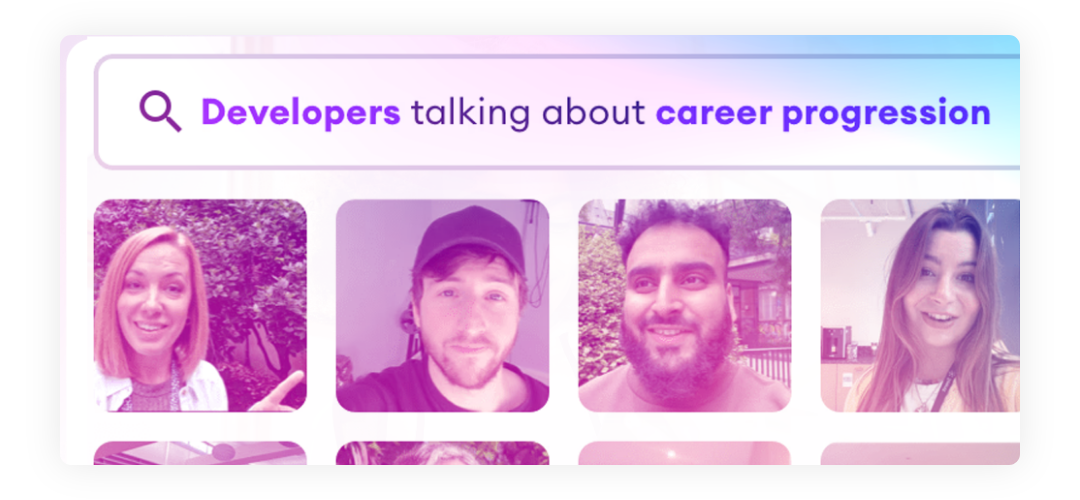
You will already be aware of the importance of representation in your marketing and attraction, but can your candidates genuinely identify with the people and stories they’re seeing?
Candidates are savvy enough to know that employer brand content is designed to persuade them. So if every employee uses the same, scripted language, it can be difficult to hear the person behind the message which can impact authenticity.
Our upcoming report, The Science of Employee Generated Content, dives into the power behind this and the credibility that individuality brings to your employer brand during the attraction stage.
Look for ways to give employees the freedom and confidence to tell their own stories, like through user generated content that they take the lead on. This could take the form of videos or posts shared on social, blog posts, thought pieces, or articles for the company website, or sharing professional milestones on LinkedIn. It can also be worth looking into different platforms that can help the team to create, for example Seenit guides and supports employees from start to finish in creating authentic testimonials in their own voices, even if being on camera isn’t something they’re used to.
Keep warm communications
What the candidate is thinking: Is this worth continuing?
Now they’re in the process, candidates are deciding whether to keep investing their time and attention.
Good candidates lose interest, disengage or drop out.
Several things can raise red flags for candidates, with silence being the first. If there are delays or gaps in communication, without any context given, candidates will worry and fill those silences with their own stories, wondering whether they have failed or been forgotten.
Ensure you’re giving candidates clear communication deliberately at the moments where uncertainty is most likely to grow, rather than just increasing your volume of communications overall.
CIPD and Omni RMS reported in 2024 that 27% of UK employers recruiting in the previous year had experienced a new starter simply failing to turn up on Day One.
We recently outlined four key principles exploring science-backed approaches to this stage in the recruitment process, backed up by real examples of how to apply them shared by Holly Pearce, Grant Thornton’s Talent and Recruitment Experience Manager, in our blog. For practical strategies to reduce reneges and make sure your candidates are ready to join your team, read the full article here.

Assessment
What the candidate is thinking: Can I show you what I can do?
Candidates naturally form judgements about whether an assessment seems connected to the job and whether it feels like a reasonable way of making a decision about them.
Poorly designed or inconsistently delivered assessment can drive drop-out, distort performance and lead to poorer hiring decisions.
Ensure you explain what you are assessing and why it matters to the role.
Difficulty should also be purposeful. An assessment should be challenging because the capability being assessed is challenging, not because the instructions are unclear, the interface is awkward or the time limit has not been properly tested.
It’s also important to think about the team delivering the assessment and how their behaviour can affect fairness and consistency, as this can impact how attractive the company feels at this stage in the journey.

Preboarding and Onboarding
What the candidate is thinking: Have I made the right choice?
Once a candidate receives and accepts an offer, the judgements and decision-making don’t stop there. Candidates may still be comparing opportunities, responding to a counteroffer or looking for reassurance that they have made the right choice.
Candidates accept offers, then renege, fail to show or disengage early.
Ensure your preboarding creates reassurance, connection and preparedness. Ahead of day one, share useful information and create opportunities to build connections (either in-person or virtually) to help candidates feel more engaged and prepared.
On day one, it’s important that the experience matches what you promised the candidate during attraction and recruitment.
If candidates were told they would have a voice, give them opportunities to contribute. If they were shown a close-knit team, introduce them to that team as soon as possible. If development was part of the recruitment story, show them how learning is supported. It may seem obvious, but ensuring these things are joined up can have a really positive impact post-offer.
Four psychological judgements, one relationship
Every stage of your journey has the potential to change what a candidate thinks of your organisation. The challenge isn’t simply to optimise attraction, communications, assessment and onboarding independently. It’s to make sure they tell a consistent story.
What story does your candidate journey tell?
If you’re reviewing how your organisation attracts, assesses, hires and onboards talent, make sure to download your free copy of The Science of the Candidate Experience; to learn how to deliver better preboarding and onboarding through technology and behavioural science.
Want to learn more about Unseen? Get in touch with us today.