Beyond AI Literacy
A psychological analysis of why assessing for today’s AI skills is no longer enough
In a short space of time, the concept of being “good at AI” has changed significantly as the tools have rapidly evolved. For employers, building assessments to understand candidate AI proficiency can therefore feel like chasing a moving target. How can we effectively evidence the skills we need from candidates when the tools are changing so quickly?
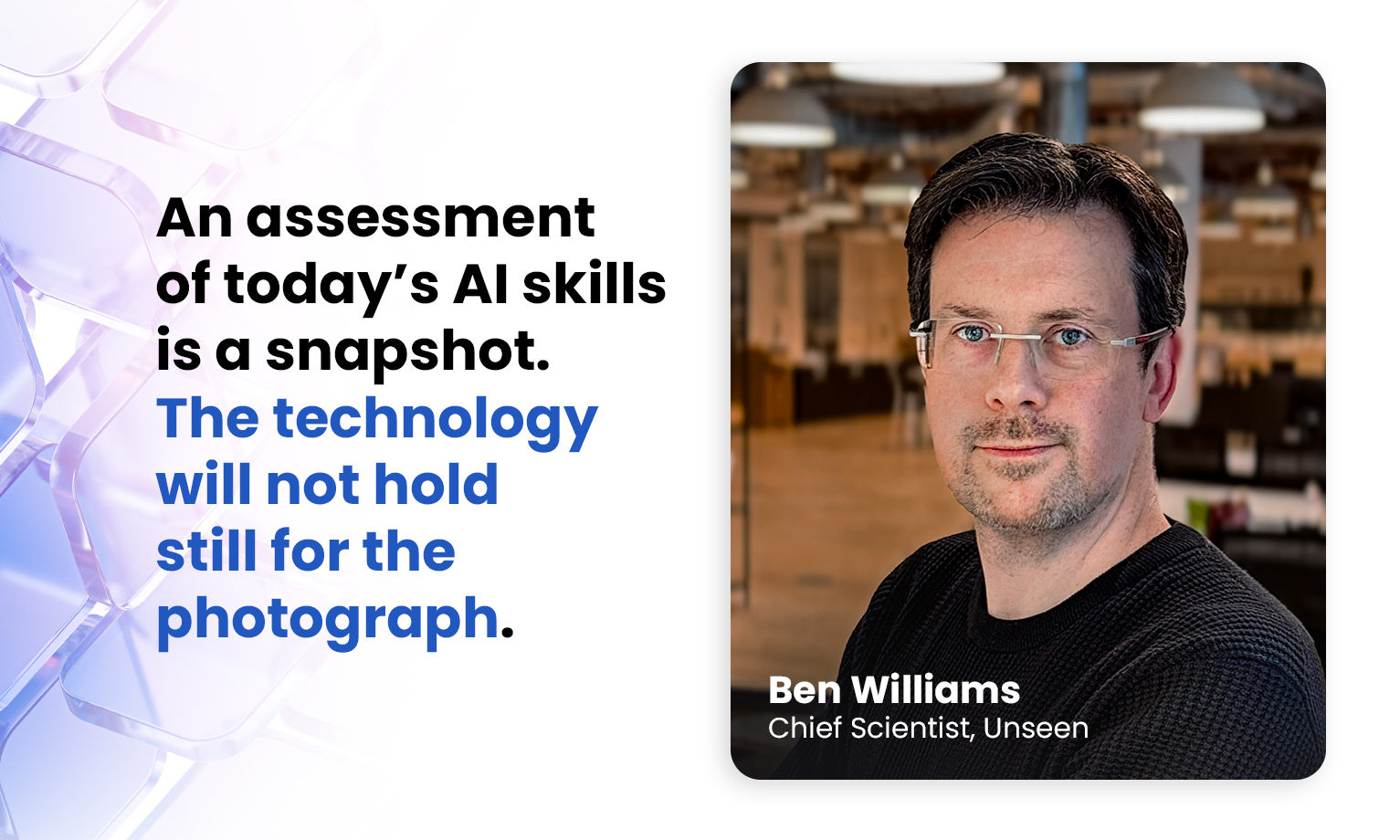
Our latest whitepaper by Ben Williams, Chief Scientist at Unseen, introduces the concept of AI Orientation: a more enduring way to explore the motivations, confidence, values and beliefs that shape how people engage with AI; and how to turn those findings into useful assessment evidence.

AI literacy can only show so much
Knowing what someone can do with AI today does not tell you everything about how they will approach tomorrow’s possibilities. AI Orientation considers the attitudes, motivations and personal boundaries behind that approach which allow us to understand a longer-term view of the individual.
The psychology behind AI use
Our research-informed approach brings together three perspectives that offer a richer picture than asking whether someone is “good with AI”; personality, motivation and beliefs & attitudes.
What you’re already assessing
We explore how your existing assessments may already be providing the right kinds of evidence about some of the psychological foundations of AI Orientation.
Applying the approach
The whitepaper looks at how you can apply job analysis to AI-enabled work, the legal considerations and how this can be relevantly applied to selection criteria.
Understand why people approach AI differently
People with similar AI skills may need different support. AI Orientation explores the dispositions, motivations, attitudes, values and beliefs behind their approach. Open a statement to see how this could shape a development conversation.
“I don’t think I can learn this.”
Willingness and self-belief are not the same.
Someone may want to use AI but doubt their ability to learn. A supported, manageable task could be more useful than asking for greater enthusiasm.
A useful starting point: what feels difficult, and what have previous learning experiences shown?
“I can’t see the point.”
Find the purpose, not just the enthusiasm.
Someone does not have to find AI fascinating to have a reason to use it. Explore whether an appropriate application could help them achieve an outcome they value.
A useful starting point: what real problem could AI help with, and what would the trade-offs be?
“I disagree with how it is used.”
A concern is not automatically a development need.
An objection might relate to one application, a supplier or a settled ethical principle. Understand its scope before assuming that more training will change it.
A useful starting point: which uses feel unacceptable, and would any safeguards address that concern?
Illustrative development conversations from Beyond AI Literacy. These are starting points for discussion, not an assessment or a diagnosis.
A more considered way to understand AI skills
Beyond AI Literacy explores how AI Orientation can inform conversations about hiring and development, while keeping assessment connected to what a role actually requires.
- Look beyond current technical skills to the motivations and beliefs that shape AI use.
- Consider how existing assessments can be complemented by structured interviews and tailored exercises.
- Use a more personal starting point for development conversations about AI.